

Top Jordan Sneakers for On-Court Performance on the Court
Regarding on-court performance sneakers, Jordan Brand operates at a singular intersection between tradition and cutting-edge tech. The brand built its identity on Michael Jordan’s six title runs, and in 2026 it still manages to equip NBA pros while supporting millions of amateur hoopers who expect genuine basketball performance. But here’s the problem: with over 40 signature shoes and scores of offshoots, knowing which Jordans genuinely perform well on the court requires real research. Not every Jordan is built for basketball these days — retro models from the ’80s and ’90s don’t have modern technology, while latest signature lines provide advanced cushioning and support that challenge anything out there. This review breaks down the greatest Jordan shoes for court play in 2026, grading each across impact absorption, court grip, lockdown, heaviness, and responsiveness.
What Makes a Elite Basketball Shoe in 2026
Contemporary basketball requires dynamic multi-directional play — fast-break runs, side-to-side shuffles, quick deceleration, jumping — requiring shock absorption that handles shock without sacrificing responsiveness. Grip is perhaps the most critical quality, because a shoe that slides on dirty courts is legitimately dangerous, increasing likelihood of rolled ankles and knee problems. Structural support includes external structures like lateral outriggers and heel counters plus the sneaker’s ability to hold your foot during aggressive direction changes. Weight has turned into essential as the game gets faster, with professional guards preferring shoes under 14 ounces while big men allow jordan sneakers up to 16 for extra ankle stability. Breathability stops heat buildup that reduces grip and comfort during extended sessions. The perfect basketball shoe combines all five qualities without heavily compromising any single one.
Air Jordan 38: The Premier Performer
As the summit of Jordan Brand’s on-court technology, the Air Jordan 38 pairs Formula 23 foam with a full-length Zoom Air Strobel for an incredibly energetic ride. At 13.8 ounces in a men’s size 10, it balances light agility with padding that protects your joints during intense play. The woven Jacquard upper supported with Flywire cables secures the foot down during side-to-side motion while remaining airy for extended contests. Court grip is exceptional — the herringbone outsole grips both clean and dusty courts with assurance, and the outsole rubber endures a full casual season of 3-4 games each week. The midfoot shank delivers torsional stability during crossover dribbles and defensive shuffles. At $200 retail price, it competes with the LeBron 22 and provides what numerous critics consider the best Jordan court feel since the Jordan 28.
Jordan Tatum 3: Top Affordable Performance Shoe
At $130, Jayson Tatum’s third namesake shoe has become the consensus greatest-value basketball sneaker of 2026, providing high-level on-court capability. The React foam midsole with front-foot Zoom Air gives all-day cushioning while delivering pop for powerful initial bursts and rim finishes. At 12.9 ounces, it’s one of the most lightweight court shoes on the market, excellently fitted for backcourt players and wings valuing speed. The engineered mesh upper conforms to the foot after short adjustment, and the internal heel counter holds the ankle without restricting motion. Grip uses generously spaced herringbone grooves that direct dust away, preserving court bite on dirty courts. Numerous NBA pros beyond Tatum have been noticed wearing it in games — the strongest endorsement of on-court quality.
Air Jordan 37: The All-Around All-Rounder
While technically previous-generation, the AJ37 continues to be broadly available at lower costs and still stacks up with new releases. The Lenoweave upper is at the same time lightweight, breathable, and stable — a fabric breakthrough influencing Jordan’s entire court shoe range. Double-stacked Zoom Air in both forefoot and heel offers on-court sensation remarkably close to natural while providing genuine impact protection. At 14.1 ounces, it’s marginally weightier than the Tatum 3 but compensates with superior ankle support from its extended collar height and Flywire system, which makes it excellent for power forwards and big men. The outsole grip is among the most aggressive in the lineup, with deep cuts that bite even during hard lateral cuts. Originally $185, it now retails for $120–$140 — perhaps the best performance-to-price ratio in Jordan’s catalog.
Jordan Luka 3: Designed for Crafty Floor Generals
The Luka 3, engineered for Luka Dončić’s skill-based game, targets hoopers who depend on footwork and body control over pure explosiveness. The full-length Zoom Strobel is placed right under the foot, creating a court-hugging feel that boosts equilibrium during step-back shots and Euro-steps. The wide base and extended stability wing deliver lateral support among the best in Jordan’s range, making it well-suited for heavier players or those with weak ankles. Grip uses a rotational pattern facilitating post spins and rotations core to Dončić’s game, however grip declines somewhat on very dusty courts. At $140 with extended sizing up to 18, it’s accessible to large-footed players who have difficulty getting basketball shoes in their size. For any player who values footwork over raw speed, the Luka 3 shines at what it’s designed to do.
| Model | Price | Weight (Size 10) | Cushioning | Best Position | Rating |
|---|---|---|---|---|---|
| Air Jordan 38 | $200 | 13.8 oz | Formula 23 + Zoom Air | Any position | 9.5/10 |
| Jordan Tatum 3 | $130 | 12.9 oz | React + Zoom Air | Guards / Wings | 9.0/10 |
| Air Jordan 37 | $120–$140 | 14.1 oz | Dual Zoom Air | Any position | 8.5/10 |
| Jordan Luka 3 | $140 | 14.3 oz | Zoom Strobel | Playmakers and guards | 8.5/10 |
Retro Jordans on the Court: What Actually Performs
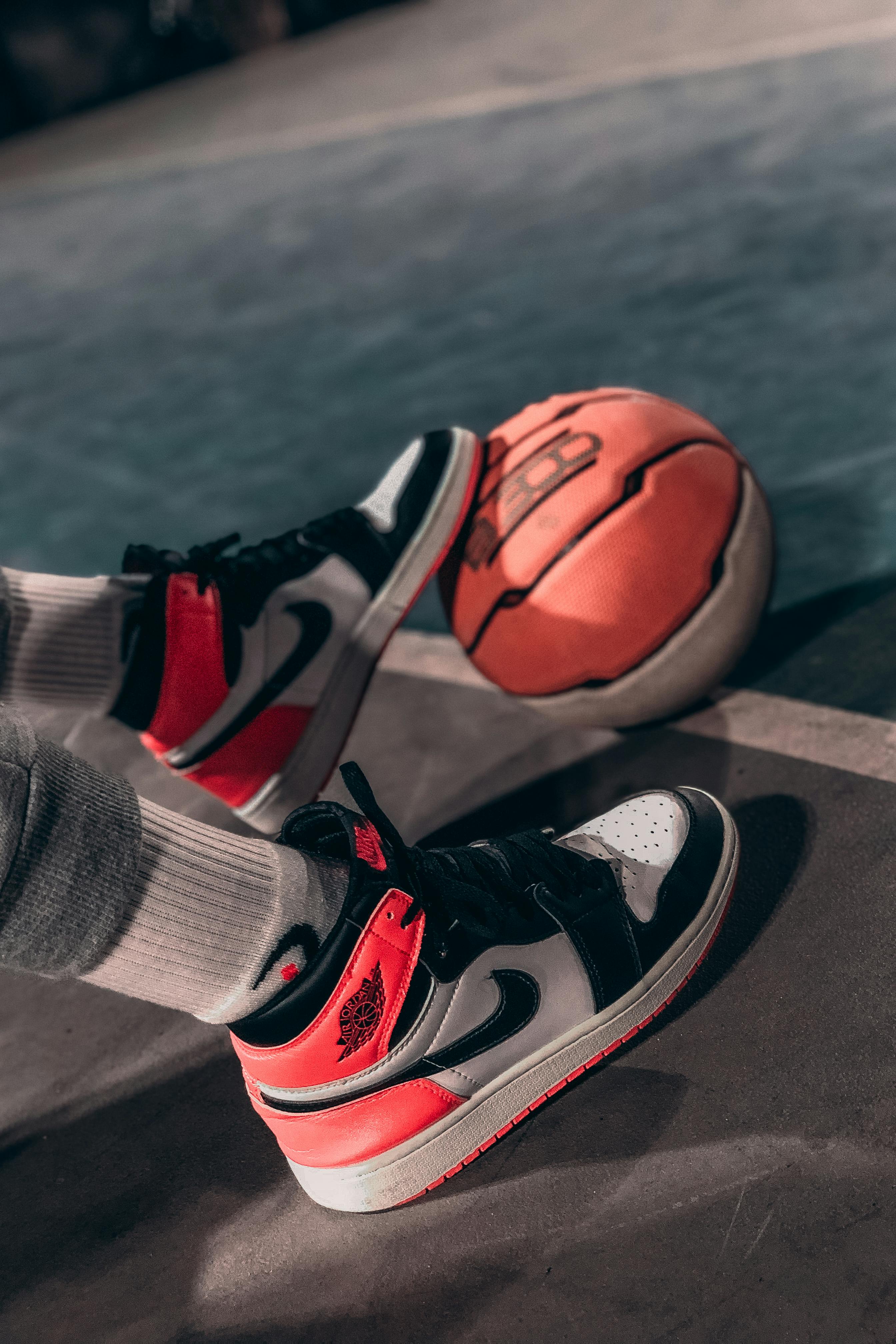
The pull to ball in retros is real, but performance limitations make most retro models poor picks for real basketball in 2026. Retro releases use ’80s and ’90s impact protection — enclosed Nike Air that provides minimal shock absorption but lacks the bounce-back and energy return of modern Zoom Air and React foam. The Air Jordan 11 Retro is the one notable standout many ballers still consider usable, because of its carbon fiber plate and full-length Air unit, though even it can’t match 2026 court shoes. Grip on retros uses dated rubber formulas that degrade quicker and provide less bite, especially on unswept recreational courts. Throwback construction — heavy leather, bulky collars — add considerable weight, averaging 16-18 ounces versus 13-14 for modern performers. Findings in the British Journal of Sports Medicine has indicated that external ankle bracing from high-tops is not as helpful than ankle strengthening exercises. Save your retros for everyday styling and pick up purpose-built court shoes for the court.
Selecting the Right Jordan for Your Playing Style
To choose the right shoe, you require an candid analysis of your game, role, and court environment. Guards relying on pace should focus on lightweight sneakers with bouncy forefoot units — the Tatum 3 excels here at under 13 ounces with Zoom Air forefoot cushioning. Versatile forwards and all-around forwards want well-rounded cushioning for slashing and pull-up jumpers — the AJ38 and AJ37 fill this role superbly. Post players should examine the Luka 3, which delivers outstanding balance during post battles without losing impact protection. Hardwood players can select softer rubber compounds for hardwood grip, while outdoor players need harder, more durable rubber. Your injury background should guide your decision — ankle issues favor wider base platforms, knee issues benefit from top-level cushioning. Test shoes in person when possible, running through court-specific moves like defensive slides and quick stops to test actual performance.
Looking After Your Court Jordans
Court kicks get worn hard, and regular upkeep can stretch their functional life by several months. Scrub the outsole after every session with a firm brush and lukewarm water to clean out outsole grooves — blocked channels are the chief reason basketball shoes stop gripping. Allow sneakers to dry naturally completely between wears, which takes 12-24 hours, because residual dampness weakens foam and breeds bacteria that cause odor. Cycle between a minimum of two pairs if you hoop more than two times a week, as this gives midsole foam entirely decompress between sessions. Change court Jordans after approximately 75-100 hours of court time — cushioning degrades invisibly long before outsoles exhibit wear. Place at room temperature away from radiators that speed up cushioning degradation. These practices aren’t just about longevity — they’re about staying healthy, because dead midsole cushioning leads to bone stress injuries, heel pain, and rolled ankles.
For the full Jordan basketball collection, visit the Jordan Brand basketball collection on Nike.com.